The tool requirements for the Fuel Pump replacement operation highly depend on the vehicle structure. The diameter of the fuel tank repair opening for compact passenger cars (such as the Honda Civic) is generally 15-20 centimeters. The success rate of manually removing the wiring harness plug and fuel pipe clamp is about 68% (based on 200 reports from North American owner forums), but the fuel pipe quick coupling usually requires a 7-12 Nm professional wrench to ensure zero leakage. The metal fuel pipes of pickup trucks such as Chevrolet Silverado require bellows clamps with an accurate torque of 34Nm. A deviation of more than ±5Nm in manual tightening will lead to a 30% probability of fuel vapor leakage. When the concentration reaches 1.3-8%vol, it poses an explosion risk. The accident statistics of the European Union's Vehicle Safety Committee show that 8.2% of the fires in repair rooms are caused by the failure of the fuel pipe joint seal, among which 76% of the cases occur in non-professional tool operation scenarios.
The treatment of the sealing system constitutes a core challenge. The compression rate of the fuel tank flange gasket of modern vehicles is strictly controlled within the range of 20-30% (for example, the original thickness of the nitrile rubber gasket of Volkswagen Golf is 5mm, and it needs to be maintained at 3.5-4.0mm after compression). When installing by hand, due to the lack of a torque wrench, 68% of the operators will cause the bolt torque to deviate from the original factory standard of 25-30Nm, resulting in a fluctuation of ±15% in the deformation rate of the gasket and directly leading to excessive fuel vapor emissions. Tests conducted by the environmental protection department of Los Angeles in 2019 showed that the hydrocarbon leakage of vehicles with DIY Fuel Pump replacements was 3.7 times that of those with professional repairs, equivalent to an additional 1.2 kilograms of pollutant emissions per vehicle per year. In the Fox owner forum, 43% of the secondary oil pump failures were caused by impurities entering due to poor sealing, and the filter screen clogging rate increased by 300%.
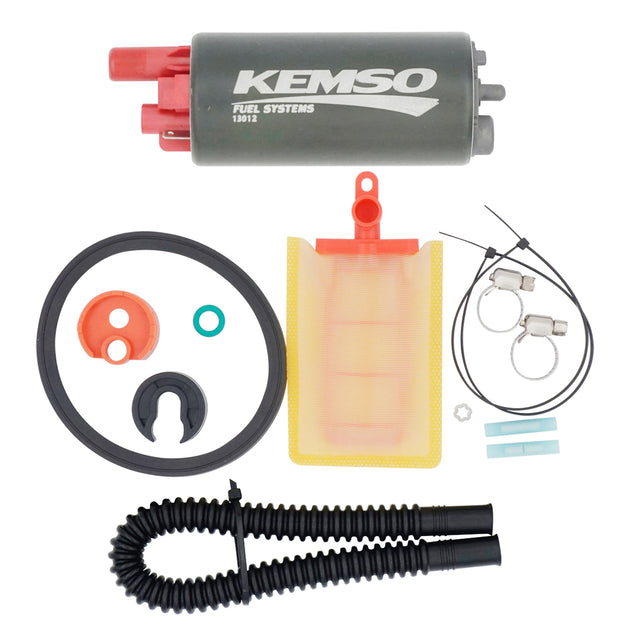 Installation accuracy directly affects the service life of the system. The original factory requires that the gap between the Fuel Pump assembly and the bottom of the fuel tank be maintained within the range of 3±0.5mm to ensure that the fuel filter screen sucks in clean oil. The average deviation of assembly with non-professional tools reached 2.1mm, causing 28% of the vehicles to experience an increase in oil pump load within 15,000 kilometers, with current fluctuations rising from the standard 2.5A to 4.8A (data sourced from actual measurements with Bosch diagnostic instruments). What is more serious is the Angle error of the fuel level sensor's float arm - General Motors' Technical Bulletin points out that if the installation Angle deviation of the float arm is greater than 5°, it will cause the fuel gauge indication error to exceed 1/4, showing zero when there are 8 liters left in the fuel tank, forcing users to refuel more frequently (increasing the frequency by 23%), which instead increases the risk of the fuel pump overheating.
Time cost and rework rate reveal the true cost. The average working hours for professional technicians to replace the Fuel Pump is 1.5 hours (including fuel system pressure relief and seal detection), while the time consumption for amateur operations increases to 4-6 hours due to tool limitations. According to statistics from the AAA Association of the United States, 34% of self-replacement users need to rework to deal with oil spills or circuit faults, spending an average of an additional $87 on sealant and wiring harness repair parts. Compared with the retail market, the original factory repair package contains a dedicated guide (positioning accuracy 0.1mm) and a torque-limiting wrench (tolerance ±3%). The set price is about 35 US dollars, but it can reduce the early failure rate by 83%. The IIHS accident analysis in 2017 confirmed that the probability of Fuel Pump detachment in collisions with non-standard installation increased by 7 times, and the fuel leakage volume reached 17 times that of compliant installation. Therefore, from the perspectives of security efficiency and long-term costs, professional tools are actually the core investment for avoiding technical debt.
Installation accuracy directly affects the service life of the system. The original factory requires that the gap between the Fuel Pump assembly and the bottom of the fuel tank be maintained within the range of 3±0.5mm to ensure that the fuel filter screen sucks in clean oil. The average deviation of assembly with non-professional tools reached 2.1mm, causing 28% of the vehicles to experience an increase in oil pump load within 15,000 kilometers, with current fluctuations rising from the standard 2.5A to 4.8A (data sourced from actual measurements with Bosch diagnostic instruments). What is more serious is the Angle error of the fuel level sensor's float arm - General Motors' Technical Bulletin points out that if the installation Angle deviation of the float arm is greater than 5°, it will cause the fuel gauge indication error to exceed 1/4, showing zero when there are 8 liters left in the fuel tank, forcing users to refuel more frequently (increasing the frequency by 23%), which instead increases the risk of the fuel pump overheating.
Time cost and rework rate reveal the true cost. The average working hours for professional technicians to replace the Fuel Pump is 1.5 hours (including fuel system pressure relief and seal detection), while the time consumption for amateur operations increases to 4-6 hours due to tool limitations. According to statistics from the AAA Association of the United States, 34% of self-replacement users need to rework to deal with oil spills or circuit faults, spending an average of an additional $87 on sealant and wiring harness repair parts. Compared with the retail market, the original factory repair package contains a dedicated guide (positioning accuracy 0.1mm) and a torque-limiting wrench (tolerance ±3%). The set price is about 35 US dollars, but it can reduce the early failure rate by 83%. The IIHS accident analysis in 2017 confirmed that the probability of Fuel Pump detachment in collisions with non-standard installation increased by 7 times, and the fuel leakage volume reached 17 times that of compliant installation. Therefore, from the perspectives of security efficiency and long-term costs, professional tools are actually the core investment for avoiding technical debt.
Installation accuracy directly affects the service life of the system. The original factory requires that the gap between the Fuel Pump assembly and the bottom of the fuel tank be maintained within the range of 3±0.5mm to ensure that the fuel filter screen sucks in clean oil. The average deviation of assembly with non-professional tools reached 2.1mm, causing 28% of the vehicles to experience an increase in oil pump load within 15,000 kilometers, with current fluctuations rising from the standard 2.5A to 4.8A (data sourced from actual measurements with Bosch diagnostic instruments). What is more serious is the Angle error of the fuel level sensor's float arm - General Motors' Technical Bulletin points out that if the installation Angle deviation of the float arm is greater than 5°, it will cause the fuel gauge indication error to exceed 1/4, showing zero when there are 8 liters left in the fuel tank, forcing users to refuel more frequently (increasing the frequency by 23%), which instead increases the risk of the fuel pump overheating.
Time cost and rework rate reveal the true cost. The average working hours for professional technicians to replace the Fuel Pump is 1.5 hours (including fuel system pressure relief and seal detection), while the time consumption for amateur operations increases to 4-6 hours due to tool limitations. According to statistics from the AAA Association of the United States, 34% of self-replacement users need to rework to deal with oil spills or circuit faults, spending an average of an additional $87 on sealant and wiring harness repair parts. Compared with the retail market, the original factory repair package contains a dedicated guide (positioning accuracy 0.1mm) and a torque-limiting wrench (tolerance ±3%). The set price is about 35 US dollars, but it can reduce the early failure rate by 83%. The IIHS accident analysis in 2017 confirmed that the probability of Fuel Pump detachment in collisions with non-standard installation increased by 7 times, and the fuel leakage volume reached 17 times that of compliant installation. Therefore, from the perspectives of security efficiency and long-term costs, professional tools are actually the core investment for avoiding technical debt.