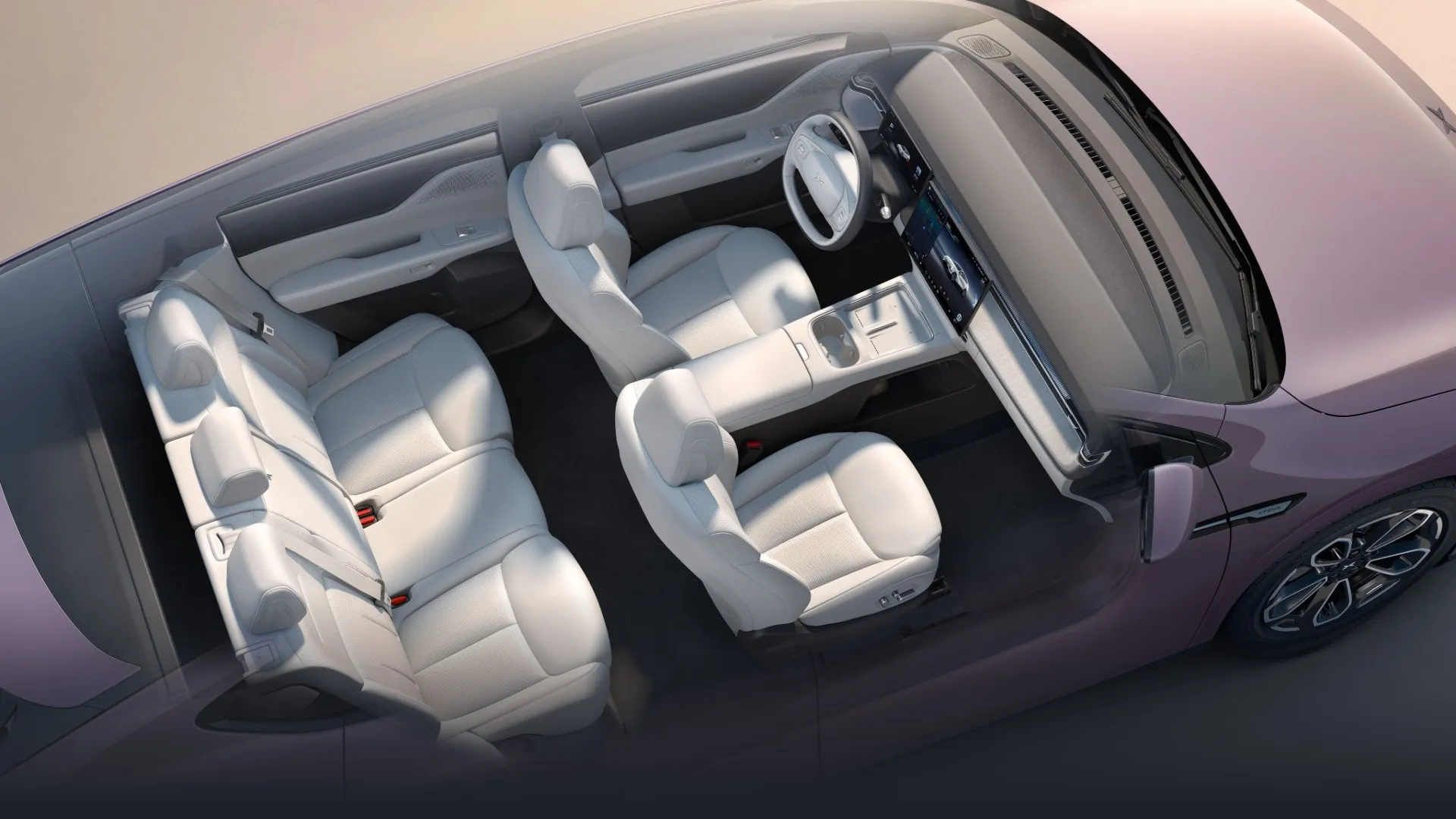
The XPENG G6 gives Australian EV buyers numbers that are easier to compare with everyday petrol-SUV use. The 2026 RWD Long Range offers 525km WLTP range, an 80.8kWh LFP battery and up to 451kW DC charging, with XPENG claiming 10–80% charging in 12 minutes under suitable conditions. The AWD Performance produces 358kW and 660Nm and reaches 100km/h in 4.13 seconds. Its 2024 ANCAP assessment returned 88% for adult protection and 86% for child protection. Australia also had 1,324 public fast or ultra-fast charging sites by June 2025, making the G6 easier to consider beyond urban commuting.
Australia’s EV market is no longer a small category with only a few models. More than 1.2 million new vehicles were sold in 2025, while battery-electric vehicles represented 8.3% of sales and more than 100 BEV models were available. SUVs accounted for 60.7% of the total market, so an electric SUV such as the G6 is competing in the vehicle type Australians buy most often rather than asking buyers to change body style.
That market context makes dimensions more useful than styling language. The G6 measures about 4.75 metres long and 1.92 metres wide, with a 2,890mm wheelbase. The luggage area provides 571 litres with the rear seats in place and 1,374 litres when they are folded, while the Long Range carries a quoted payload of 475kg.
A family EV is easier to judge by litres, kilograms and charging minutes than by a long equipment description.
The 2,890mm wheelbase matters because it leaves substantial cabin length within a midsize exterior footprint. Five seats, rear ISOFIX points and a 571-litre boot put the G6 into the same practical conversation as petrol and hybrid family SUVs. In Q4 2025, medium SUVs represented 29.15% of all Australian new light-vehicle sales, and BEVs already held 19.74% of that segment, up from 10.64% one year earlier.
| 2026 G6 specification | RWD Long Range | AWD Performance |
|---|---|---|
| Battery | 80.8kWh LFP | 80.8kWh LFP |
| WLTP range | 525km | 510km |
| Power | 218kW | 358kW |
| Torque | 440Nm | 660Nm |
| 0–100km/h | 6.7 sec | 4.13 sec |
| Maximum DC charging | 451kW | 451kW |
| 10–80% DC claim | 12 min | 12 min |
| Energy use | 17.9kWh/100km | 18.4kWh/100km |
XPENG’s Australian configurator lists those figures for the current versions, and the comparison shows what the extra motor costs in efficiency. The Performance uses about 2.8% more energy per 100km based on the quoted WLTP consumption figures, while giving 64% more power than the Long Range. Its range falls by only 15km, or roughly 2.9%, although real road results will change with speed, temperature, tyre pressure, elevation and climate-control use.
Charging performance has a larger effect on long journeys than another small increase in battery capacity. The 800V electrical platform and 5C LFP battery permit a quoted 451kW peak, and XPENG states that 10–80% can take 12 minutes when battery and charger conditions allow it. That 70-percentage-point charging window represents roughly 56.6kWh in an 80.8kWh battery before normal charging losses are considered.
A 451kW specification should not be read as 451kW at every public charger or throughout an entire charging session. Charger output, battery temperature, battery state of charge and the vehicle’s charging curve all affect the rate, and power normally reduces as the battery fills. The useful comparison is that the vehicle can accept far more than the output available from many existing public units, leaving headroom as higher-powered sites become more common.
Infrastructure has been expanding at the same time. Australia had 812 public fast or ultra-fast charging sites in December 2023, 1,172 by December 2024 and 1,324 sites with 4,138 plugs by June 2025. That is a 63% rise in site count in about 18 months, although coverage still differs considerably between metropolitan areas and remote routes.
A 12-minute vehicle capability is most useful when the route also has a charger capable of supplying very high power.
Home charging produces a different ownership pattern. The G6 supports 11kW AC charging, and XPENG quotes about 9.2 hours for a 5–100% AC charge on the 80.8kWh versions. Someone travelling 40km per day at the Long Range model’s quoted 17.9kWh/100km would use about 7.2kWh daily, so a full battery recharge would rarely be required during normal commuting.
That calculation changes how electric cars australia can be compared with petrol vehicles. Petrol drivers usually refill after consuming most of a tank; an EV owner with home charging can replace the day’s energy overnight. Public DC charging then becomes more relevant to highway travel, apartment residents without dedicated parking, and unusually high daily mileage.
The battery also supplies energy outside the vehicle. The G6 provides up to 6kW vehicle-to-load output, allowing compatible camping equipment, tools or appliances to use electricity from the traction battery. A constant 1kW appliance running for five hours would consume about 5kWh, roughly 6.2% of an 80.8kWh battery before conversion losses.
Performance presents another measurable difference from older expectations of economical vehicles. The AWD model’s 358kW and 660Nm output gives it a claimed 4.13-second 0–100km/h time, while the 218kW rear-wheel-drive Long Range takes 6.7 seconds. Buyers therefore do not have to choose a small battery commuter to get electric efficiency or a petrol performance SUV to get strong acceleration.
The faster version is not automatically the better fit. At a quoted 18.4kWh/100km, the AWD Performance uses more energy than the 17.9kWh/100km Long Range and weighs 2,220kg compared with 2,115kg. That 105kg difference is about 5%, so drivers who rarely need AWD traction or 4.13-second acceleration can obtain slightly better efficiency and 15km more WLTP range from the rear-wheel-drive model.
Cabin technology is similarly measurable rather than limited to a long options list. The G6 uses a 15.6-inch central touchscreen alongside a 10.25-inch digital instrument display, supports wireless Apple CarPlay and Android Auto, and provides over-the-air software updating. XPENG also lists an 18-speaker XOPERA 2.0 audio system with 7.1.4 surround-sound capability.
A screen-led cabin will not suit every driver. Touch controls can require more visual attention than fixed buttons for frequently adjusted settings, so a test drive should include climate controls, navigation, mirror adjustment, parking views and steering-wheel functions rather than only acceleration. Software features can also change through updates, making the 2026 interface a more relevant reference than reviews of earlier software versions.
Safety data adds independent testing to the manufacturer specifications. ANCAP tested the G6 in 2024 and applied its five-star rating to all Australian variants sold from October 2024. It scored 88% for Adult Occupant Protection, 86% for Child Occupant Protection, 81% for Vulnerable Road User Protection and 80% for Safety Assist.
ANCAP also lists dual frontal airbags, side chest protection, side head protection and a centre airbag as standard. Autonomous emergency braking covers car-to-car, vulnerable-road-user, junction, crossing, backover and head-on scenarios, while lane-keep assistance, lane-departure warning and emergency lane keeping are included. The rating remains listed with an expiry date of December 2031 under ANCAP’s current assessment record.
Australian buying patterns provide a useful check against the idea that EV adoption is moving at one constant rate. BEVs represented 7.2% of new sales in 2023 and 8.3% in 2025, an increase of only 1.1 percentage points over two years. Yet individual segments moved faster: BEVs reached 19.74% of medium-SUV sales in Q4 2025, compared with 10.64% in Q4 2024.
The G6 sits inside that stronger SUV movement with specifications aimed at normal family use rather than an EV-only niche. Its 2026 Long Range combines 525km WLTP range, five seats, 571 litres of luggage capacity, 475kg payload and 1,500kg braked towing capacity, while a 5.8m turning radius keeps its physical size manageable around urban parking areas.
Range figures still need realistic interpretation before purchase. WLTP testing provides a standard comparison between vehicles, not a promise of 525km on every trip. Sustained motorway speeds, heating or air-conditioning, heavy luggage and elevation can raise consumption, so route planning should include reserve energy rather than dividing the advertised range by the trip distance.
For a 400km journey, for example, the Long Range’s 525km WLTP figure leaves a theoretical 125km margin, equivalent to about 23.8% of its rated range. Actual reserve can be smaller on a fast highway trip, which is why charging-site location and reliability are more useful planning inputs than maximum range alone.
Australia’s charger count offers more options than it did in 2023, while the G6’s 800V hardware can use higher-powered infrastructure as it appears. Combined with a five-star 2024 ANCAP rating, 6kW V2L output, 571 litres of luggage room and 12-minute claimed 10–80% charging, the G6 can now be assessed with the same practical questions used for any family SUV: where it will travel, what it will carry, where it will recharge and how much performance the owner will actually use.