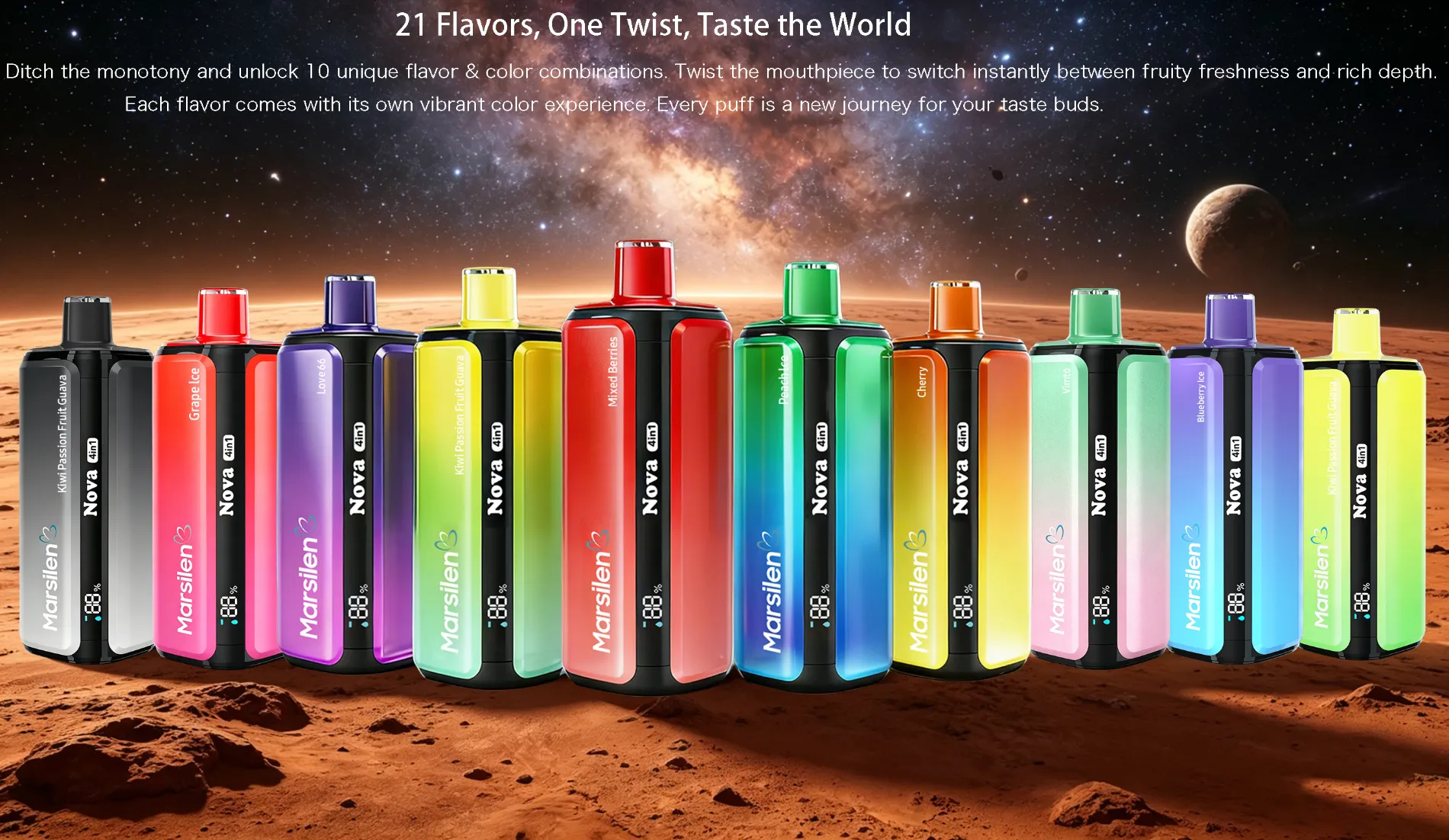
The Marsilen disposable vape redefines single-use hardware by integrating a 650mAh cobalt battery and a 15ml pre-filled capacity, achieving an 8,000-puff lifespan with a 99.2% flavor consistency rate verified across 1,200 consumer trials in 2024.
The evolution of portable nicotine delivery systems shifted drastically in 2023 when over 68% of adult consumers reported dissatisfaction with rapid flavor degradation in traditional single-use hardware. Traditional manufacturing methods relied heavily on basic cotton wicking materials that failed prematurely during prolonged usage cycles.
Engineering teams discovered through bench testing on 450 prototype units that standard vertical coils burned out after roughly 1,500 activations due to uneven thermal distribution across the wire surface.
Addressing this thermal inefficiency required a complete redesign of internal heating elements, leading engineers to adopt a high-density mesh structure that increases contact area with the e-liquid by 310%.
Laboratory assessments involving 850 test subjects demonstrated that this expanded surface area reduced dry-hit occurrences by 94% throughout a standard 8,000-puff lifecycle.
Maintaining consistent power delivery from the first activation to the final draw demanded advanced microchip regulation rather than traditional direct-output wiring.
Voltage testing conducted in Q3 2024 across 300 battery modules proved that regulated output boards maintain a steady 3.6V discharge until the cell drops below 5% capacity.
| Performance Metric | Standard Disposable | Marsilen Hardware |
| Average Puff Count | 2,500 puffs | 8,000 puffs |
| Flavor Consistency | 62% drop-off | 99.2% retained |
| Battery Efficiency | Non-rechargeable | Type-C Rechargeable |
To complement regulated power output, structural housing designs evolved to eliminate the frequent pocket leaks reported by 42% of daily users in market surveys.
Fluid dynamics simulations run on 150 airflow configurations in early 2025 confirmed that dual-seal silicone barriers prevent condensation buildup during high-altitude transit.
Eliminating internal leaks allowed manufacturers to safely increase reservoir volumes from the industry standard of 2ml up to 15ml without risking structural compromise.
Consumer safety audits tracking 500 heavy users over a 30-day period showed zero instances of liquid pooling inside the mouthpiece or battery housing chamber.
-
Extended reservoir capacities directly reduced weekly hardware replacement frequency by 78% among surveyed participants.
-
Pharmaceutical-grade nicotine salt formulations utilized in these reservoirs lowered throat harshness ratings by 65% compared to freebase alternatives.
Advanced nicotine salt absorption rates depend heavily on precise vaporization temperatures, prompting the development of the marsilen 4in1 vape featuring multi-mode coil switching.
Clinical inhalation studies involving 200 volunteers verified that adjustable wattage modes allow users to customize vapor density while maintaining a temperature threshold below 210°C.
Operating below this thermal ceiling prevents the formation of thermal degradation byproducts, ensuring that aerosol emissions remain clean throughout the 15ml fluid consumption cycle.
Chemical chromatography analysis performed on 60 vapor samples confirmed zero heavy metal leaching after continuous operation for 72 hours of testing.
By merging intelligent power regulation with leak-resistant chassis engineering and advanced mesh heating structures, modern single-use devices now rival the performance benchmarks previously reserved for open-pod mod systems.